
The Hard Part of Plastic Recovery Isn't the Recycling — It's Deciding What's Safe to Recycle
Shredded e-waste plastic looks like one material, but hidden inside are plastics carrying POPs — the flame retardants that rule out standard recycling. Identifying and removing them is the unglamorous work that sends most e-waste plastic to landfill, and the part we built our line to handle.
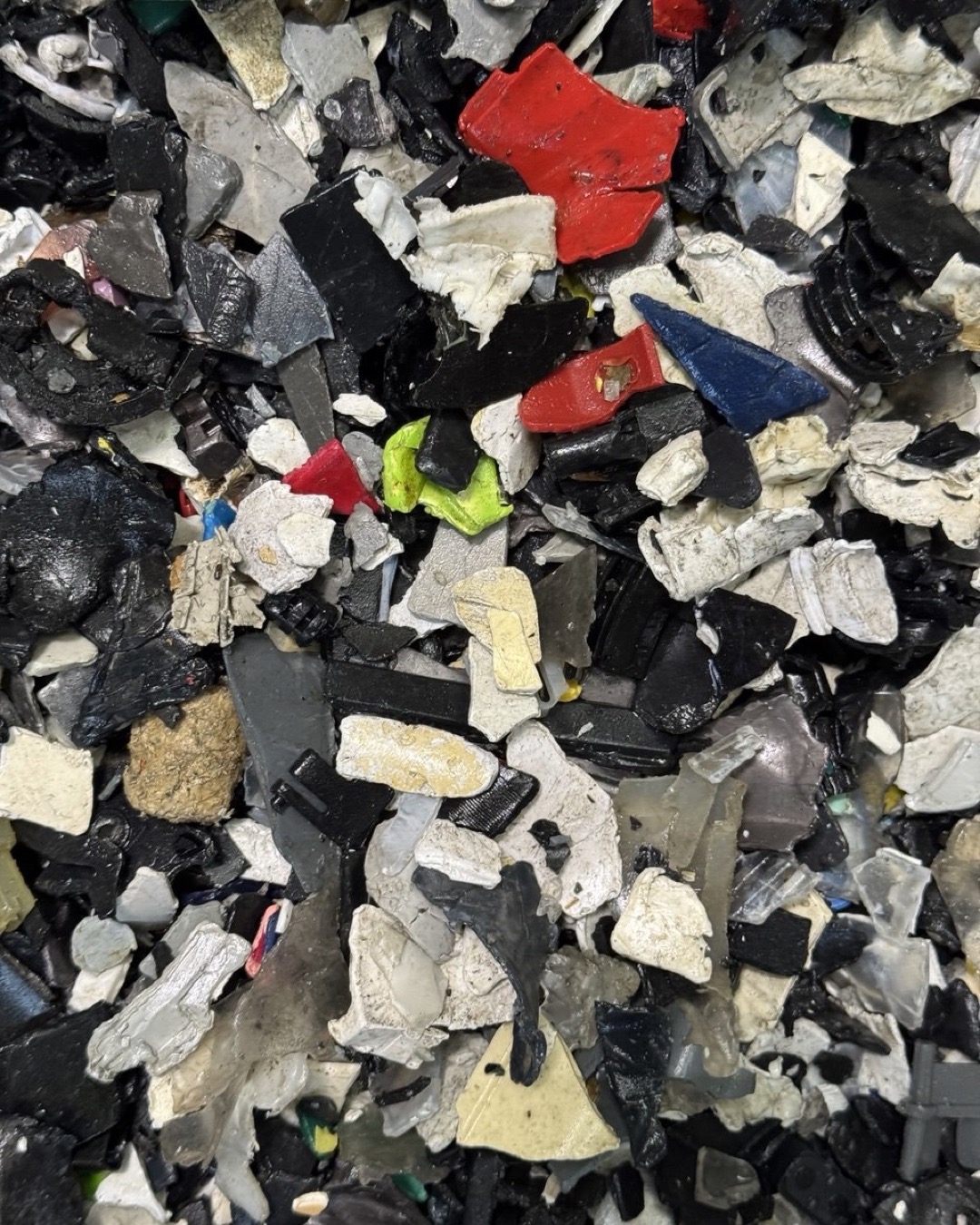
This is shredded plastic from end-of-life electronics. It looks like one material. It isn't.
Hidden in a stream like this are plastics that contain POPs — Persistent Organic Pollutants, mostly the flame retardants once built into casings and components to stop them catching fire. They did their job for decades. But that same chemistry means these plastics can't simply be recycled back into new products. They have to be identified and kept out of the clean stream.
The Part Most Operators Won't Touch
That separation is genuinely difficult, and it's where most e-waste plastic recovery quietly stops:
- Identifying which fragments carry these compounds and which don't
- Separating the contaminated fraction from the clean material
- Keeping the unwanted chemistry out of the recycled stream
- Cleaning what's left so it can safely re-enter manufacturing
It's slower and harder than handling clean metal. It's also a big reason most e-waste plastic ends up in landfill or incineration — because doing it properly is genuinely difficult.
Why It Gets Skipped
For a stream that's only around a fifth of e-waste by mass, the easy commercial answer has always been to chase the high-value metals and ship the plastic problem somewhere else. The contaminated fraction is invisible to the eye and inconsistent from load to load, so half-measures don't work — you either build the capability to tell the fragments apart, or you don't recover the plastic at all.
That's the choice that keeps recoverable polymer out of the supply chain.
How We Handle It
Our AI-driven Hermion sorting platform is built for exactly this decision — separating flame-retardant-bearing plastics from clean polymer streams before mechanical recovery, rather than treating the shredded mix as a single material. That upstream sorting is what lets our plastic recovery line reach 75%+ recovery efficiency, against a 40–60% baseline for traditional recyclers, while keeping the unwanted chemistry out of what re-enters manufacturing.
The unglamorous truth of plastic recovery is that the hard part isn't the recycling. It's everything that has to happen before you're even able to.
The honest question for the industry: when you hear "e-waste plastic recycling," do you picture the work being in the processing — or in deciding what's safe to process at all? If you have a view, get in touch — we'd like to hear it.
More News
International E-Waste Day 2026: The Small Stuff Adds Up
Headlamps. Bluetooth keyboards. TV remotes. A toy laptop. One box. Small enough to forget about. That's the problem.
Meet Us at E-Scrap 2026 in New Orleans — Booth #320
3R Technology Global is at E-Scrap 2026, October 26-28 at the Hyatt Regency New Orleans — Booth #320. Got e-waste with nowhere to go? Let's talk.
Meet Us at E-Waste World Expo North America — Stand 325
3R Technology Global is exhibiting at E-Waste World Expo North America, October 28-29 at the Cobb Convention Center, Atlanta — Stand 325. Stop by, say hello and meet the team in person.